
Advertisement
Fertilizer feels like a kind gesture.
A plant looks a little tired, and a dose of plant food seems like the obvious answer.
Sometimes it helps.
Often, though, indoor plants need far less feeding than we expect.
Advertisement
Extra fertilizer does not simply vanish.
It can build up in the pot, harm the roots and even make some pests more comfortable.
This guide explains why a lighter hand is usually the calmer choice.
It draws on the University of Maryland Extension and the University of California IPM program.
It does not give a fixed dose, because the right amount depends on the product.
Your fertilizer label is always the final word on how much and how often.
What Fertilizer Leaves Behind
Most fertilizers are salts that dissolve in water.
The University of Maryland Extension guide to watering indoor plants calls them soluble salts.
It describes them as minerals, such as fertilizers, dissolved in water.
When water evaporates from the potting mix, those salts stay behind.
Over time they become more and more concentrated.
The UMD Extension explains that this buildup can make it harder for the plant to take up water.
At very high levels, water is drawn out of the root tips, which damages the roots directly.
A weakened plant is also more open to attack from insects and diseases.
So each extra dose of fertilizer adds a little more to a problem you cannot see at first.
Signs That Salts Are Building Up
The plant and the pot usually give you clues.
The UMD Extension lists these symptoms of soluble salt buildup.
- Slower or reduced growth.
- Brown leaf tips.
- Lower leaves dropping off.
- Dead root tips.
- Wilting, even when the mix is moist.
You may also see a white or tan crust.
It can form around the pot at the soil line or around the drainage hole.
On clay pots, it often shows up on the outside walls.
Brown tips have several possible causes, and our guide to brown leaf tips walks through them.
If you see these signs, the answer is rarely more fertilizer.
It is usually less fertilizer and a good flush with clean water.
Why Extra Nitrogen Can Invite Pests and Mildew
Nitrogen is the part of fertilizer that pushes soft, green growth.
That sounds like a good thing, and in moderation it is.
Too much, however, can tip the balance toward problems.
The UC Pest Notes on aphids explain that aphids feed on soft, new plant growth.
They state that high levels of nitrogen fertilizer favor aphid reproduction.
Their advice is clear: never use more nitrogen than necessary.
They also suggest slow-release products, applied in small portions rather than all at once.
Powdery mildew follows a similar pattern.
The UC Pest Notes on powdery mildew say too much nitrogen causes lush foliage and shade.
Those conditions favor the growth of this fungal disease.
The same page recommends avoiding excess fertilizing or using a slow-release fertilizer.
Our guides to aphids and powdery mildew indoors cover both problems in detail.
A Gentle Feeding Routine
A calm feeding routine has only a few parts.
- Read the fertilizer label before every use, even if you have used it before.
- Never use more than the label directs.
- When you are unsure, choose the smaller amount.
- Consider a slow-release product, as the UC program suggests.
- Flush the pot with clear water before you fertilize.
- Write down the date you fed each plant.
The UMD Extension recommends leaching a plant before you fertilize.
That way, you do not wash away the fertilizer you just added.
It also gives the new feeding a clean start, without old salts underneath.
Watch the new leaves in the weeks that follow.
Steady, normal-sized growth is a good sign.
Soft, crowded shoots with pests nearby suggest it is time to feed even less.
How to Flush Salts From a Pot
The UMD Extension recommends leaching houseplants with clear water every four to six months.
Leaching simply means running plenty of water through the mix to carry salts away.
Here are the steps it describes.
- If a crust of salt has formed on top of the mix, remove it by hand first.
- Pour a lot of water through the potting mix, at least twice the volume of the pot.
- Keep the water running through so the salts wash out.
- Let the pot drain completely.
A small plant is easiest to flush in the kitchen sink.
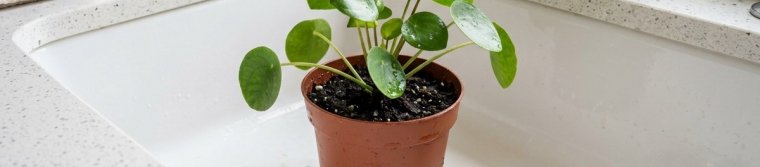
After flushing, do not let the pot sit in the water that runs out.
Wait until the mix is dry about two inches down before you water again.
Our guide on how to water indoor plants explains that finger test step by step.
The Water You Use Matters Too
Fertilizer is not the only source of salts.
The UMD Extension notes that all water contains dissolved minerals.
It adds that softened water contains more and should be avoided for houseplants.
It suggests a few gentler options.
- Collect rainwater in clean buckets when rain is expected.
- Use the water from a dehumidifier drain pan, which is distilled.
- Draw tap water a day ahead and let it stand.
- When you use standing water, leave the bottom one to two inches in the container.
The UMD Extension explains that a day of standing lets chlorine clear and most minerals settle.
None of this has to be perfect.
Small changes in water and feeding add up over months.
New Plants and Nursery Salts
Plants often come home with more fertilizer in the pot than you would use.
The UMD Extension explains that greenhouse plants can tolerate far higher salt levels.
It says a plant grown with excellent greenhouse light and drainage tolerates levels ten times higher.
Inside a home, the same plant is much more sensitive.
That is why the UMD Extension recommends leaching every new plant the first time you water it.
It also means a new plant rarely needs feeding in its first weeks with you.
Our checklist for bringing home a new houseplant includes this first flush.
When Repotting Is the Better Answer
Sometimes flushing is not enough.
The UMD Extension suggests repotting if the salt level seems high or the pot drains poorly.
Fresh potting mix gives the roots a clean start.
A pot with a working drainage hole lets each watering carry salts away.
Our guide to choosing a pot with good drainage explains what to look for.
Storing Fertilizer Safely
Plant food is a household chemical, even when it smells mild.
- Keep fertilizer in its original container, with the label attached.
- Store it on a high shelf or in a latched cabinet, away from children and pets.
- Close the container right after use.
- Never pour fertilizer into a food or drink container.
Our guides to houseplants and young children and pet-friendly houseplants have more tips for a safer home.
A Calm Checklist
- Remember that fertilizer salts stay in the pot when water evaporates.
- Watch for brown tips, dropping lower leaves and a white crust.
- Never use more fertilizer than the label directs.
- Avoid extra nitrogen, which can favor aphids and powdery mildew.
- Choose slow-release products in small portions.
- Flush with clear water every four to six months, and before you feed.
- Avoid softened water for houseplants.
- Leach new plants at their first watering.
Feeding a houseplant is a small act of care.
Done lightly, it supports steady growth without stressing the roots.
When in doubt, a glass of clean water is often the kinder gift.
Sources and Further Reading
- University of Maryland Extension — Watering Indoor Plants: supports how soluble salts build up, their symptoms, leaching every four to six months with twice the pot volume, leaching before fertilizing, avoiding softened water, leaching new plants and repotting when salts are high.
- UC Statewide Integrated Pest Management Program — Pest Notes: Aphids: supports that high nitrogen favors aphid reproduction and the advice to use slow-release fertilizer in small portions.
- UC Statewide Integrated Pest Management Program — Pest Notes: Powdery Mildew on Ornamentals: supports that too much nitrogen causes lush foliage that favors powdery mildew, and avoiding excess fertilizing.