
Bringing home a new plant is one of the small joys of indoor gardening.
You pick a spot, turn the best leaf toward the room, and step back to enjoy it.
There is one quiet habit that makes that joy last longer.
Before the new plant joins the others, give it a careful look and a short stay on its own.
Many common houseplant pests travel from one home to the next on new plants.
The University of California Statewide Integrated Pest Management Program repeats the same advice across its pest guides.
Its Pest Notes on whiteflies, for example, recommend inspecting new plants before introducing them.
This checklist turns that advice into a few calm steps.
Before You Buy: A Two-Minute Inspection
The easiest pest to deal with is the one you never bring home.
In the store, take a moment to look the plant over.
- Turn several leaves over and look at the undersides.
- Check where each leaf meets the stem, and the center where new leaves emerge.
- Look at the newest shoots and any flower buds.
- Run a finger along the main stems, feeling for small hard bumps.
- Touch a few leaves to feel for stickiness.
- Glance at the surface of the soil and the bottom of the pot.
A small magnifying glass in your pocket makes this much easier.
If anything looks doubtful, it is fine to choose another plant.
What the Common Hitchhikers Look Like
You do not need to identify everything in the store.
It helps, though, to know the usual signs.
- Mealybugs: white, cottony tufts tucked into leaf joints.
- Scale insects: small, hard or rounded bumps on stems and leaf veins that do not move.
- Aphids: soft, pear-shaped insects clustered on new growth.
- Spider mites: fine pale speckles on leaves, sometimes with thin webbing.
- Whiteflies: tiny white insects that fly up when you move the plant.
- Thrips: silvery patches with tiny black specks on the leaves.
- Fungus gnats: small dark flies hovering near damp soil.
Sticky, shiny leaves are worth noticing on their own.
That sticky film is honeydew, and several of these pests produce it.
Our guides on mealybugs, scale insects and spider mites show each one in more detail.
Getting It Home Safely
A plant that just left a warm store can be stressed by a cold car or a hot trunk.
In cold weather, wrap it loosely in a bag or paper for the trip.
In hot weather, do not leave it sitting in a closed car.
At home, set it down out of direct sun and away from heater vents for the first day.
Set Up a Simple Quarantine
Quarantine sounds serious, but at home it is very simple.
It just means keeping the new plant apart from your other plants for a while.
Many pests are tiny, and their eggs or young can be hidden when you buy the plant.
A few weeks gives them time to show themselves before they can spread.
- Choose a spot with suitable light, in a different room if possible.
- Make sure the new plant does not touch any other plant.
- Give it its own saucer, and do not share stakes or tools.
- Wash your hands after handling it, before you touch other plants.
We suggest two to three weeks for most plants.
If you find a pest during that time, the clock starts again once the problem is cleared.
Check It Every Few Days
A quarantine works only if you look.
Every few days, repeat the same inspection you did in the store.
- Look under several leaves, including the lower ones.
- Check the leaf joints and the growing tip.
- Hold a sheet of white paper under a branch and tap it, then look for anything moving.
- Feel the leaves for new stickiness.
- Look at the soil surface for small flying insects.
The white paper tap is a trick the UC program describes for both spider mites and thrips.
It takes seconds and often shows pests you would never spot on the leaf.
The First Watering: Flush the Pot
New plants often come from greenhouses, where they are fed regularly.
Fertilizer leaves dissolved minerals, called soluble salts, behind in the potting mix.
The University of Maryland Extension explains why that matters indoors.
A plant grown in a greenhouse with excellent light and drainage can tolerate salt levels 10 times higher than one grown in a home.
The extension notes that some nurseries leach plants before sale, but not all do.
It recommends leaching every newly purchased plant the first time you water it.
- Set the pot in a sink or tub.
- If a white crust has formed on the soil, gently remove it first.
- Slowly pour clear water through the soil, at least twice the volume of the pot.
- Let it drain completely.
- Return the plant to its saucer, and empty any water that collects there.
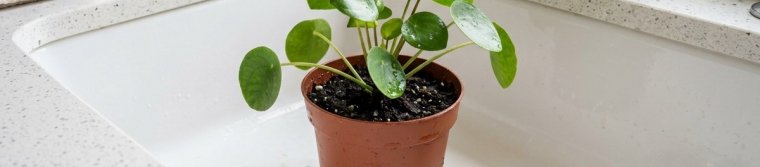
The extension is clear that a houseplant should never be left sitting in water.
After this first flush, wait until the soil is dry about two inches down before you water again.
Check the Pot and Drainage
Many plants are sold in plain plastic nursery pots, and that is fine for now.
Look underneath to make sure there are drainage holes.
If the plant sits in a decorative pot without holes, lift it out after each watering to drain.
The University of Maryland Extension notes a useful clue while you water.
If your finger cannot go two inches into the soil, the mix may be too dense or the plant may be root bound.
The extension also suggests repotting when salt levels seem high or the pot drains poorly.
Otherwise, there is no rush to repot a new plant in its first few weeks.
Let it settle into the light and the routine of your home first.
Hold Off on Fertilizer
A plant fresh from a nursery usually has plenty of nutrients in its soil.
Feeding right away can add to the salt buildup the first flush just removed.
Lots of fertilizer can also invite pests.
The UC program's Pest Notes on aphids note that high levels of nitrogen favor aphid reproduction.
Wait until the plant shows steady new growth, then feed lightly.
If You Find a Pest
Finding something during quarantine is a success, not a failure.
It is exactly what the quarantine is for.
- Keep the plant isolated.
- Identify the pest using the signs above and our pest guides.
- Start with gentle steps, such as rinsing, wiping, or pruning.
- Restart the quarantine once the plant is clean.
If a plant arrives badly infested, returning or discarding it is often the calmest choice.
A Note for Homes With Pets
If you share your home with cats or dogs, check the plant before you buy it.
The ASPCA list of toxic and non-toxic plants is the reference to use.
Keep the plant out of reach during quarantine too, since a new plant attracts curious noses.
Our guide to pet-friendly houseplants lists easier choices.
Joining the Collection
When the weeks pass and every check comes up clean, the new plant is ready.
Move it to its permanent spot and add it to your normal watering routine.
Our guide on how to water indoor plants walks through that routine.
The few minutes you spent looking closely now protect every plant you already love.
Sources and Further Reading
- University of Maryland Extension — Watering Indoor Plants: supports leaching new plants at the first watering, greenhouse versus home salt tolerance, the twice-the-volume flush, never letting plants sit in water, the two-inch test, and repotting for poor drainage.
- UC Statewide Integrated Pest Management Program — Pest Notes: Whiteflies: supports inspecting new plants before introducing them.
- UC Statewide Integrated Pest Management Program — Pest Notes: Aphids: supports the link between high nitrogen and aphid reproduction.
- UC Statewide Integrated Pest Management Program — Pest Notes Library: research-based guides to mealybugs, scales, spider mites, thrips, and fungus gnats.
- ASPCA Animal Poison Control — Toxic and Non-Toxic Plants: the reference for checking whether a new plant is safe around cats and dogs.