
A plant can have good sun, steady water and rich soil and still look pale and slow.
Sometimes the cause is not a missing nutrient at all.
It is the soil pH, quietly locking nutrients away from the roots.
The fix is often simple, but only if you know which way to move the pH.
This guide follows the soil pH fact sheet from Clemson Cooperative Extension.
It covers what pH means, why it changes, and how to raise or lower it safely.
What Soil pH Measures
Soil pH is a measure of how acidic or alkaline the soil is.
The scale runs from 0 to 14, with 7 as neutral.
Values below 7 are acidic, and values above 7 are alkaline.
Different plants thrive in different ranges.
- Acid-loving plants, such as azaleas, rhododendrons, blueberries and conifers, prefer pH 5.0 to 5.5.
- Most vegetables, lawn grasses and ornamentals prefer pH 5.8 to 6.5.
Outside these ranges, plants often grow weaker and show nutrient problems.
Why pH Matters So Much
Clemson Extension calls pH one of the most important factors in plant growth.
The reason is nutrient availability.
In very acidic soil, aluminum and manganese become more available and can harm plants.
At the same time, calcium, phosphorus and magnesium become harder for roots to take up.
Above pH 6.5, phosphorus and most micronutrients become less available.
Keeping pH in the right range often fixes these problems without extra fertilizer.
What Changes Soil pH
Parent rock
Soil formed from basic rock tends to have a higher pH than soil formed from acidic rock.
Rainfall
Rain passing through the soil slowly washes away calcium and magnesium.
Acidic elements such as aluminum and iron take their place.
That is why soils in rainy regions tend to be more acidic than soils in dry ones.
Fertilizers and mulch
Fertilizers that contain ammonium or urea speed up acidification.
Decaying organic matter can make soil slightly more acidic.
Some mulches, such as pine needles and oak leaves, can do the same.
Soil texture
Some soils resist pH change more than others.
Clay soils and soils rich in organic matter resist change strongly.
Sandy soils change more easily.
So clay soil needs more lime or sulfur than sandy soil for the same shift.
Always Test Before You Adjust
Clemson Extension is clear: test the soil before changing its pH.
Guessing can push the soil too far, and that is hard to undo.
Take samples in fall for next year's garden.
That leaves time for lime to work before spring planting.
Our guide to taking a garden soil sample shows how to collect and send a sample.
The report gives the current pH and the amount of lime or sulfur to add.
How to Raise Soil pH With Lime
Clemson Extension notes that South Carolina soils are typically acidic, often between pH 4.5 and 6.0.
Many other rainy regions have acidic soil too, but only a test can confirm it.
The usual way to raise pH is ground agricultural limestone.
The finer the particles, the faster it works.
Types of lime
- Pulverized lime is finely ground and reacts quickly.
- Granular and pelletized lime spread more easily and are convenient for lawns.
- Hydrated lime acts much faster than regular limestone, so use it with caution.
When and how to apply lime
Apply lime in fall or winter if the test calls for it.
For best results, spread it two to three months before planting.
Placement matters most.
Lime works by touching soil, so mix it in well in garden beds.
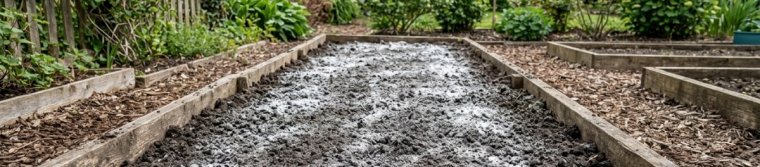
It also needs moisture, since lime reacts slowly in dry soil.
On lawns, lime is usually spread on the surface.
Using Wood Ashes
Wood ashes from a fireplace can also raise soil pH.
They add potassium and calcium, along with phosphate, boron and other elements.
Use them with care, though.
- They can raise pH a lot in sandy soil.
- Keep them away from sprouting seeds and plant roots.
- Spread a thin layer in winter and work it in during spring.
- Test the soil every year if you use them.
Never use coal ashes.
Clemson Extension notes they have no lime value and may even be acidic.
How to Lower Soil pH
Some plants need more acidic soil than most gardens offer.
Blueberries and acid-loving shrubs are the usual examples.
In alkaline soil, they often develop iron chlorosis.
The leaves turn yellow, which can look like a nitrogen shortage.
Lowering the pH helps the plant take up iron again.
Elemental sulfur
Soil bacteria slowly turn sulfur into sulfuric acid.
The change depends on soil moisture and temperature, and it can take several months.
Finely ground sulfur works faster.
Sulfur is often the better choice for steady, long-term change.
Aluminum sulfate
Aluminum sulfate lowers pH as soon as it dissolves in the soil.
That speed carries risk.
Too much can injure roots, and aluminum can build up over time.
Follow the soil test and retest before applying it again.
Applying either one safely
- Work the material into the soil after spreading it.
- Wash any material off leaves right away.
- Do not apply more than the test recommends.
- Take extra care on lawns.
How Much Is Typical
The Clemson fact sheet gives general rates for loamy soil.
Lowering a loamy soil from pH 7.0 to 6.0 takes about 0.2 pounds of sulfur per 10 square feet.
Lowering it from pH 7.0 to 5.0 takes about 0.4 pounds per 10 square feet.
The same drops with aluminum sulfate take much more material.
From pH 7.0 to 6.0, it is about 1.2 pounds per 10 square feet.
Reduce these rates by one third for sandy soil.
Increase them by one half for clay soil.
These numbers are only a guide, so let your own soil test set the final amount.
Where pH Fits in the Bigger Picture
Getting pH right makes every other step in the garden work better.
Fertilizer only helps if roots can actually take it up.
Our guide to fertilizing trees and shrubs explains why feeding without a reason rarely helps.
If you are about to plant, our guide to planting a shrub shows how to time lime with planting.
A Simple Soil pH Checklist
- Test the soil before adding lime or sulfur.
- Aim for pH 5.8 to 6.5 for most vegetables and ornamentals.
- Aim for pH 5.0 to 5.5 for blueberries and other acid-loving plants.
- Sample in fall and lime two to three months before planting.
- Mix lime well into moist soil in garden beds.
- Use wood ashes sparingly, and never coal ashes.
- Prefer sulfur for slow, steady lowering of pH.
- Use less on sandy soil and more on clay.
- Retest every year or two.
A Calm Way to See It
Changing soil pH is a slow, quiet job.
Test, adjust a little, wait, and test again.
Over a season or two, the soil settles into a range where plants can feed well.
Sources and Further Reading
- Clemson Cooperative Extension, Home and Garden Information Center — How to Change Soil pH: supports the pH scale, preferred ranges, nutrient availability, causes of pH change, lime types and timing, wood ashes, iron chlorosis, sulfur and aluminum sulfate, and the general application rates.
- Clemson Cooperative Extension — Soil Testing: how to collect a sample and read the report.
- Clemson Cooperative Extension — Planting Shrubs Correctly: testing three to four months before planting, since lime needs 8 to 12 weeks to work.