
A pot of basil by the back door changes how you cook.
A snip of chives, a few sprigs of thyme or a handful of mint can lift a simple meal.
Most herbs are also among the easiest plants to grow.
Clemson Cooperative Extension notes that many are drought-tolerant and do not need very fertile soil.
Many also resist insects and diseases naturally.
This guide follows the herbs fact sheet from Clemson Extension.
It covers sun, soil, planting, watering, harvest and a few easy herbs to start with.
What Counts as an Herb
Practically speaking, herbs are plants grown for seasoning, scent or traditional uses.
Most are annuals or perennials with soft stems.
A few, such as lavender and rosemary, are small shrubs.
Herbs also feed bees, butterflies and hummingbirds when they bloom.
That makes an herb bed useful to you and to the garden around it.
Sun Comes First
Almost all herbs grow best with at least six hours of sun a day.
Clemson Extension explains that the scented oils behind herb flavors build up most in strong sun.
A few herbs, such as parsley and mint, prefer partial shade.
Watch where the sun falls through the day before you choose a spot.
Drainage Matters Most
Many common herbs come from the Mediterranean region.
They like full sun, well-drained soil and dry summers.
In humid regions with heavy soil, they can struggle.
Clemson Extension suggests three simple helps:
- Grow them in raised beds for better drainage.
- Choose varieties that tolerate your climate.
- Use a mulch of stone or gravel to help prevent disease.
Our guide to building a raised garden bed shows how to start one.
Improving the soil
Herbs prefer a soil pH between 6 and 7, with a moderate amount of organic matter.
In clay soil, Clemson Extension suggests working in 2 to 3 inches of fine pine bark, pea gravel or coarse compost.
Mix it in 8 to 12 inches deep.
In sandy soil, add 2 to 3 inches of fine pine bark, compost or leaf mold to hold moisture.
Very few herbs grow well in wet soil.
Mint and lemongrass are the exceptions that enjoy moist ground.
Go Easy on Fertilizer
Most herbs do not need rich soil.
Clemson Extension notes that very fertile soil tends to produce lush leaves with less flavor.
Base any lime or fertilizer on a soil test.
Our guide to taking a garden soil sample walks through the steps.
When in doubt, feed lightly or not at all.
Planting Annual and Perennial Herbs
Annual herbs
Annual herbs grow from seed or from small plants.
Basil, cilantro and dill can be sown directly in the garden.
Cold-hardy herbs such as parsley can be sown in fall.
Tender herbs such as basil go in after all danger of frost has passed in spring.
Perennial herbs
Most perennial herbs are planted from small pots.
Clemson Extension suggests planting them in fall or early spring when possible.
That gives the roots time to settle in before the summer heat.
Pinch out the tips of new plants to make them branch and fill out.
Keep spreading herbs contained
Some herbs spread fast, and mint is the classic example.
Plant mint in a container so it does not take over the bed.
Watering and Mulch
Even drought-tolerant herbs need moisture to keep growing.
Water deeply, then let the soil dry out somewhat before watering again.
Water early in the day so the leaves can dry before night.
Annual herbs often need more water, so check them more closely.
Mulch keeps soil temperature and moisture steady and discourages weeds.
Compost, bark or pine straw work well for most herbs.
Herbs with gray leaves, or those that dislike humidity, do better with 1 to 2 inches of pea gravel or small stones.
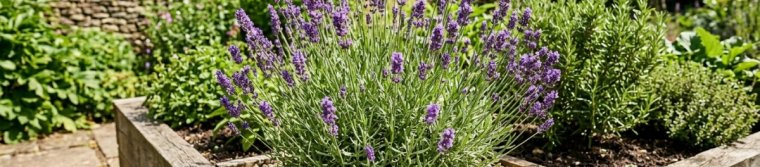
Our guide to mulching garden beds covers organic mulches in more detail.
Herbs in Containers
Many herbs grow well in pots, and some can come indoors for winter.
Clemson Extension names basil, sage, winter savory, parsley, chives, oregano and thyme among the best for containers.
Indoors, they need plenty of light from a south- or west-facing window.
Our guide to growing vegetables in containers covers pots, drainage and potting mix.
Harvest Often
Regular cutting keeps herbs sturdy, bushy and well shaped.
Clemson Extension suggests harvesting leafy herbs just before they bloom, when their oils peak.
Pick in the early morning, after the dew dries but before the heat of the day.
Collect seeds as the pods turn from green to brown, before they split open.
Gather herb flowers just before they open fully.
Keeping the harvest
Drying is the traditional way to keep herbs.
Some herbs, such as basil, lose flavor when dried.
For those, Clemson Extension suggests freezing.
Rinse and chop the leaves, place them in ice cube trays filled with water, and freeze.
Easy Herbs to Start With
- Basil: easy from seed after the last frost, and frequent picking delays flowering.
- Chives: an easy perennial with grassy leaves and edible lavender flowers.
- Parsley: grows in light shade with rich, moist soil, though the seed is slow to sprout.
- Dill: easy from seed in fall or early spring, and it goes to seed in hot weather.
- Cilantro: grows quickly in cool weather and goes to seed when summer heat arrives.
- Oregano: a hardy perennial for full sun and well-drained soil.
- Thyme: likes full sun and very well-drained soil that stays dry.
- Rosemary: an evergreen shrub for dry, sunny spots, with hardier kinds for colder areas.
- Mint: vigorous and best kept in a pot, in part shade and moist soil.
Clemson Extension notes that dill should not grow near fennel, since the two can cross.
Common Problems
Aphids and spider mites are the pests you are most likely to see.
Aphids gather on fast-growing, crowded plants.
Spider mites thrive in dry weather.
Clemson Extension suggests a strong spray of water during dry spells to discourage mites.
Good growing conditions, clean beds, regular pruning and removing weak growth are the best defense.
For gentle aphid control, see our guide to aphids in the vegetable garden.
A Simple Herb Garden Checklist
- Give most herbs at least six hours of sun.
- Choose well-drained soil, or build a raised bed.
- Aim for a soil pH between 6 and 7.
- Feed lightly, and only based on a soil test.
- Plant perennial herbs in fall or early spring.
- Keep mint in a container.
- Water deeply, then let the soil dry a little.
- Mulch gray-leaf herbs with gravel.
- Harvest often, in the morning, before the plants bloom.
A Calm Way to See It
An herb garden can start with a single sunny pot.
Pick what you use, keep the soil on the dry side and let the plants show you what they like.
Before long, a short walk outside becomes part of making dinner.
Sources and Further Reading
- Clemson Cooperative Extension, Home and Garden Information Center — Herbs: supports sun needs, drainage, soil pH and amendments, light feeding, planting times, containing mint, watering, mulch, containers, harvest timing, preserving, the herb list and common pests.
- Clemson Cooperative Extension — Raised Beds: building beds that drain well.
- Clemson Cooperative Extension — Soil Testing: how to test soil before adding lime or fertilizer.
- Clemson Cooperative Extension — Container Vegetable Gardening: pots, potting mix and drainage for container plants.