
You plant a neat row of lettuce in the evening.
By morning, half the seedlings have ragged holes, and a few are gone completely.
There is no sign of a culprit, only faint silvery trails across the soil.
That pattern usually points to snails or slugs.
They are among the most frustrating garden pests, but they follow very predictable habits.
Once you know those habits, you can protect your plants calmly and steadily.
This guide follows the Pest Notes on snails and slugs from the University of California Integrated Pest Management Program.
It focuses on simple steps that work in a home garden.
Snail or Slug?
Snails and slugs are close relatives, and neither one is an insect.
Both are mollusks that glide along on a single muscular foot.
The main difference is the shell.
Snails carry an external spiral shell, while slugs have none.
As they move, they leave mucus that dries into a shiny, silvery trail.
That trail is one of the best clues that they have visited.
How They Live
UC IPM explains that snails and slugs are most active at night and on cloudy or foggy days.
On sunny days they hide somewhere cool, dark and damp.
Boards, stones, flowerpots, weeds and dense ground covers make perfect shelters.
Every snail and slug can lay eggs after mating with another one.
Brown garden snails lay about 80 pearly white eggs at a time in a hole in the soil.
They can do this up to six times a year.
Slugs mature in about three to six months.
They lay small batches of eggs under leaves, in soil cracks and in other protected spots.
In cold weather, snails and slugs rest in the topsoil.
In hot, dry spells, snails seal themselves inside their shells and wait for better weather.
In places with mild winters, they can stay active all year.
Recognizing the Damage
Snails and slugs scrape plants with a rough, rasp-like tongue.
They leave irregular holes with smooth edges in leaves and flowers.
Young seedlings can disappear overnight.
UC IPM lists seedlings, soft leafy plants and ripening fruit near the ground among their favorites.
Strawberries and low-hanging tomatoes are common targets.
Other pests, such as earwigs and caterpillars, also chew holes in leaves.
Look for slime trails to confirm the cause before you act.
A short walk with a flashlight after dark often shows the pests at work.
Step 1: Take Away Their Hiding Places
UC IPM says the first step is to remove as many daytime shelters as you can.
- Pick up loose boards, stones and stacked pots.
- Pull weeds, especially around tree trunks and along bed edges.
- Trim leafy branches that rest on the ground.
- Thin dense ground covers, such as ivy, near vegetable beds.
Fewer hiding spots mean fewer snails and slugs survive.
The ones that remain gather in the shelters you leave, which makes them easier to find.
Place vegetable beds as far as you can from hiding places you cannot remove.
Step 2: Keep the Garden Drier at Night
Moisture is what these pests need most.
UC IPM suggests switching from sprinklers to drip irrigation where possible.
Drip lines wet the soil near plants but leave leaves and paths drier.
If you use sprinklers, run them near sunrise rather than in the evening.
That shortens the time the ground stays damp overnight.
A sunny garden spot also helps, since snails and slugs avoid heat and bright light.
Step 3: Protect Young Seedlings First
Seedlings are the plants most at risk.
A few nights of feeding can wipe out a whole sowing.
One calm option is to start seedlings indoors and plant them out when they are larger.
Our guide to starting vegetable seeds indoors explains how.
Check new transplants every evening for the first couple of weeks.
A little attention during this window prevents most losses.
Step 4: Hand-Pick Regularly
Hand-picking sounds simple, and it works well when you stay consistent.
UC IPM recommends checking daily at first, then weekly once numbers drop.
Water the area lightly in the late afternoon to draw them out.
After dark, search with a flashlight and wear rubber or latex gloves.
Drop them into a plastic bag, seal it and put it in the trash.
A bucket of soapy water also works.
Look along bed edges, under leaves, on fence ledges and under decks.
UC IPM advises against using salt, since it raises salt levels in the soil.
Step 5: Set Simple Traps
Board traps
A board trap gives snails and slugs a shelter that you control.
UC IPM describes a board about 12 by 15 inches raised on runners about 1 inch high.
The runners leave a gap so the pests can crawl underneath.
Set the board near damaged plants.
Each morning, lift it and scrape off the snails and slugs gathered below.
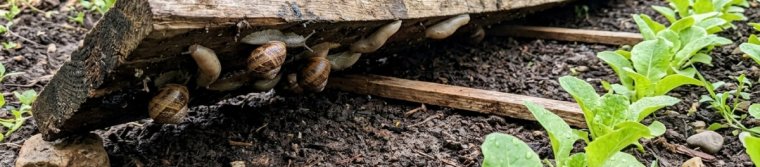
Upside-down flowerpots and melon rinds work the same way.
Beer or yeast traps
Some gardeners bury a container so its rim sits at ground level and fill it with beer.
Snails and slugs are drawn to the fermented smell, fall in and drown.
UC IPM notes that a mix of sugar water and yeast works too.
These traps only attract pests from a few feet away.
They need deep, steep sides, a cover with holes and fresh bait every few days.
Step 6: Use Copper Barriers Around Beds
Barriers keep snails and slugs out of a protected area.
UC IPM says copper flashing and copper screen are the easiest barriers to maintain.
For an upright barrier, use a copper strip at least 2 inches tall.
Bury 1 to 2 inches of it so slugs cannot crawl underneath.
Copper tape wrapped around a raised bed or planter box also repels them.
Before you add the band, make sure no snails are already inside the bed.
If the copper tarnishes, a vinegar solution cleans it.
A raised garden bed with a copper band is a calm way to protect lettuce and seedlings.
What Does Not Work Well
Many home remedies travel from garden to garden.
UC IPM reports that crushed eggshells and coffee grounds have not been shown to work.
Dry diatomaceous earth can help as a barrier, but it stops working once it gets damp.
In most gardens, that makes it hard to keep useful.
Choose Plants They Tend to Ignore
Plant choice can make the job much easier.
UC IPM lists basil, beans, cabbage, lettuce, hosta, marigolds and strawberries among plants they damage heavily.
Plants with stiff or strongly scented leaves are less appealing to them.
Examples include lavender, rosemary, sage, ferns, nasturtium, lantana and hydrangea.
Use these where snails and slugs are common, and protect tender crops closely.
A Careful Word on Baits
Baits can help, but UC IPM says they never work alone in the long run.
You still need to remove shelter and extra moisture.
Iron phosphate baits are considered safer around children, pets, birds and other wildlife.
Metaldehyde baits are poisonous to dogs and cats, and the pellets can attract dogs.
UC IPM advises against using metaldehyde where children or pets could reach it.
Whatever you choose, scatter bait thinly instead of piling it.
Apply it in the late afternoon or evening, when snails and slugs are active.
Baiting works less well in very hot, very dry or cold weather, when they are less active.
Always read and follow every direction on the product label.
A Simple Snail and Slug Checklist
- Confirm the cause by looking for silvery slime trails.
- Remove boards, stones, weeds and other daytime shelters.
- Water in the morning, or switch to drip lines.
- Watch new seedlings closely for the first weeks.
- Hand-pick after dark with gloves and a flashlight.
- Set board traps and check them every morning.
- Protect key beds with a copper band.
- Use baits only as a helper, and follow the label.
A Calm Way to See It
You will probably never remove every snail from your yard.
The goal is fewer hiding places, drier nights and protected seedlings.
A few weeks of steady effort usually brings damage down to a level you barely notice.
Keeping beds clear also helps, and our guide to weeding without stress shows how.
Sources and Further Reading
- UC Statewide Integrated Pest Management Program — Pest Notes: Snails and Slugs: supports identification, life cycle, damage, removing shelters, drip irrigation and morning watering, hand-picking, board and beer traps, copper barriers, ineffective remedies, plant choices and safe bait use.
- UC Statewide Integrated Pest Management Program — Pest Notes: Weed Management in Landscapes: how to clear the weeds that give snails and slugs daytime shelter.
- Clemson Cooperative Extension, Home and Garden Information Center — Raised Beds: building the raised beds that make copper bands easy to fit.