
Aphids crowd the tip of a pepper plant.
Tiny mites speckle the leaves of a bean.
You want them gone, but you would rather not reach for a harsh spray.
Insecticidal soap is one of the gentlest tools for this job.
It is simple to use, inexpensive and kind to most helpful insects.
It also has limits, and knowing them is what makes it work.
This guide follows the insecticidal soaps fact sheet from Clemson Cooperative Extension.
It covers what soap controls, how to mix and spray it and which plants to protect.
What Insecticidal Soap Is
Insecticidal soaps are potassium salts of fatty acids.
They are made by combining plant or animal oils with a strong alkali.
Clemson Extension describes commercial insecticidal soaps as highly refined versions of liquid dish soap.
They are sold as concentrates or as ready-to-use spray bottles wherever garden supplies are sold.
Some products add another natural ingredient, such as neem oil, pyrethrin, sulfur or spinosad.
Why Gardeners Like It
Clemson Extension lists several advantages:
- It is inexpensive to use.
- It is among the safest pesticides available.
- It leaves no harsh residue.
- It is virtually nontoxic to animals and birds.
- It can be used on vegetables up to harvest.
- Most beneficial insects are not harmed by it.
Soap also works as a gentle leaf wash.
It rinses off sticky honeydew and the black sooty mold that grows on it.
That alone can make leaves look cleaner and healthier.
Which Pests It Controls
Soap works best on small, soft-bodied pests.
Clemson Extension names aphids, mealybugs, thrips, scale crawlers and spider mites.
Scale crawlers are the young, moving stage of scale insects, before they settle under a hard cover.
Soap kills by contact.
It disrupts the cell membranes of the insect and strips away its protective waxy coating.
The pest then dries out.
If aphids are your main concern, our guide to aphids in the vegetable garden covers other gentle steps to try first.
Why Homemade Mixes Are Risky
It is tempting to mix kitchen soap and water and start spraying.
Clemson Extension warns that homemade mixtures carry a much higher risk of injuring plants.
Dry dish detergent and all laundry detergents are far too harsh for plants.
Their additives can damage leaves.
Some soaps and detergents are also poor insecticides to begin with.
A product made and labeled for plants is the calmer choice.
Plants That May Be Sensitive
Some plants react badly to soap sprays, so read the label before you start.
Clemson Extension lists these plants as sensitive:
- Portulaca, sweet pea, nasturtium and lantana
- Bleeding heart, maidenhair fern and crown of thorns
- Gardenia and Easter lily
- Cherry, plum, hawthorn, horse chestnut, mountain ash and Japanese maple
Conifers may also be sensitive during drought.
Plants with a bluish, waxy coating can lose some of that color as the wax washes away.
Azaleas, begonias, fuchsias, geraniums and impatiens are somewhat sensitive.
If leaves wilt or brown at the edges within a few hours, rinse the plant with clean water.
Step 1: Test a Small Area
Before you spray a whole plant, try a small patch of leaves.
Clemson Extension recommends waiting 24 hours to see whether any damage appears.
Do not spray plants that are stressed from lack of water.
Water dry plants first and wait until they have recovered before spraying.
Step 2: Check Your Water
Hard water makes insecticidal soap less effective.
Calcium, magnesium and iron cause the soap to separate out of the mix.
Clemson Extension describes a simple jar test.
Mix the soap and water in a clear glass jar, at the strength you plan to use.
Shake it, then let it stand for 15 minutes.
If it stays evenly milky, your water is fine for spraying.
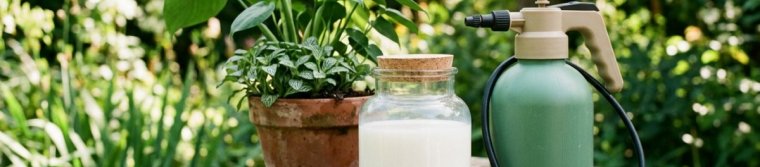
If scum forms on the surface, use distilled or bottled water instead.
Step 3: Mix at Label Strength
Clemson Extension says insecticidal soaps are usually used as a 1 to 2 percent solution.
That is about two and a half to five tablespoons per gallon of water.
Always follow the label for the product you are using.
A stronger mix is not better and can harm the plant.
Mix the concentrate in a clean sprayer.
Step 4: Spray at the Right Time
Heat and strong sun make plant injury more likely.
Clemson Extension advises against spraying in full sun or above 90 degrees Fahrenheit.
High heat and high humidity can also stress plants and make them more sensitive.
Early morning or late in the day is best.
Soap only works while it is wet, so slower drying gives better control.
Step 5: Cover the Undersides of Leaves
Soap must touch the pest to work.
Many soft-bodied pests hide on the undersides of leaves.
Spray the tops, and especially the undersides, until they are wet.
Pay close attention to new shoots and tight clusters of leaves.
Step 6: Repeat, but Not Too Often
Soap gives no lasting protection once it dries or washes off.
Clemson Extension notes that repeat sprays may be needed every 4 to 7 days, as the label directs.
Continue only until the pests are gone.
Too many applications can slowly damage leaves.
Know the Limits
Clemson Extension sums up the main drawbacks:
- The spray must wet the insect directly.
- It has no lasting effect after it dries or rinses off.
- Soap residue can injure plants in high heat.
Soap is a contact tool, not a shield.
It works best alongside other steady habits.
Check plants often, rinse small groups of pests away with water and welcome lady beetles and lacewings.
The UC IPM Pest Notes on aphids describe this kind of calm, combined approach.
Handle It With Care
Even a gentle product deserves careful handling.
Keep it in its original container, with the label attached.
Store it out of reach of children and pets.
Follow every direction and precaution printed on the label.
A Simple Insecticidal Soap Checklist
- Confirm the pest is small and soft-bodied.
- Use a product labeled for plants, not kitchen or laundry detergent.
- Check the label for sensitive plants.
- Test a small area and wait 24 hours.
- Do the jar test if your water is hard.
- Mix at label strength, usually 1 to 2 percent.
- Spray in the cool hours, never in full sun or above 90 degrees Fahrenheit.
- Wet the undersides of leaves.
- Repeat only as the label directs.
A Calm Way to See It
Insecticidal soap will not solve every pest problem.
Used at the right strength and at the right time, it handles many small ones gently.
Spray, watch and repeat only as needed.
Your plants, and the helpful insects that visit them, will be better for it.
Sources and Further Reading
- Clemson Cooperative Extension, Home and Garden Information Center — Insecticidal Soaps for Garden Pest Control: supports how soap works, the pests it controls, the risk of homemade mixes, sensitive plants, the 24-hour test, the hard water jar test, the 1 to 2 percent rate, timing, coverage, repeat sprays and limits.
- UC Statewide Integrated Pest Management Program — Pest Notes: Aphids: combining water sprays, natural enemies and soap for aphid control.
- Clemson Cooperative Extension — Integrated Pest Management for Aphids: monitoring and gentle control steps before spraying.