
A houseplant that has always done well starts to droop.
You check the soil, and it is still damp from the last watering.
You give it a little more water, but the leaves only look sadder.
When a plant wilts in wet soil, the trouble is often below the surface, in the roots.
Root rot sounds alarming, and sometimes it is serious.
The good news is that it is largely preventable.
Caught early, it can sometimes be slowed before the whole plant is lost.
This guide explains what root rot is, how to recognize it, and what to do next.
It follows the University of California Statewide Integrated Pest Management Program and the University of Maryland Extension.
What Root Rot Is
Root rot is a group of diseases that attack roots kept wet for too long.
The UC program explains that several soilborne organisms can cause it.
Species of Phytophthora are among the best known.
Others, such as Pythium, cause similar decay in seeds, seedlings and young roots.
According to the UC Pest Notes on Phytophthora root and crown rot, these organisms are favored by wet conditions.
Some produce spores that swim through the water held in soil and infect roots.
Others survive for years in moist soil as resting spores.
The UC program notes that these diseases can develop after as little as 4 to 8 hours of soil saturation.
That is why a pot left standing in water is such a risk.
Why Houseplants Get It
Roots need air as well as water.
The UC program explains that long periods of soaking reduce the oxygen in the soil.
That makes even healthy plants more open to infection.
Indoors, a few common habits keep the soil wet for too long.
- Watering on a fixed schedule instead of when the plant needs it.
- Leaving water standing in the saucer or in a decorative outer pot.
- Using a container with no drainage hole.
- Keeping a plant in old potting mix that no longer drains well.
The University of Maryland Extension notes that many houseplants are lost to overwatering and underwatering.
It advises against watering on a schedule.
It also warns never to let houseplants sit in water.
The Signs Above the Soil
The first clues usually show up on the leaves.
- Leaves wilt even though the soil is still moist.
- Leaves turn dull green or yellow, and some may drop.
- New growth slows or stops.
- The plant does not perk up after it is watered.
The UC program points out one key difference from simple thirst.
Unlike plants suffering from water stress, plants with root rot do not recover when they are watered.
The UMD Extension adds that a plant that is too wet may drop leaves or turn yellow.
It also notes that some plants, like the peace lily, can wilt when overwatered as well as when dry.
So a wilting plant in damp soil deserves a closer look before you reach for the watering can.
Check the Soil First
Before you disturb the roots, start with two quick tests from the UMD Extension.
- Push a finger about two inches into the soil. If it is moist, the plant does not need more water.
- Lift the pot. A pot that still feels heavy is still holding plenty of water.
The UMD Extension also notes something useful here.
If your finger cannot go two inches deep, the mix may need to be more porous.
The plant may also be root bound.
Our guide on how to water indoor plants explains both tests in detail.
Look at the Roots
The only way to be sure is to see the roots.
The UC program even suggests sliding plants out of their pots before you buy them, to check the root system.
The same simple move works at home.
- Lay down newspaper or work over a sink.
- Turn the pot on its side and support the base of the stems with one hand.
- Tap or squeeze the pot gently and slide the root ball out.
- Look at the outside of the root ball, then at a few roots up close.
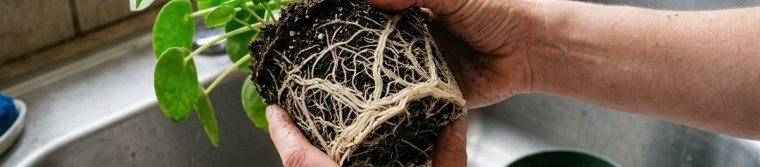
The UC program shows a healthy root as pale, next to a black root killed by rot.
Healthy roots are usually pale and firm.
Rotting roots look brown or black and feel soft.
The UC program also advises buyers to avoid plants with brown roots on the outside of the root ball.
Step 1: Stop Watering and Let the Mix Dry
If only a few roots look dark and the plant is mostly healthy, start gently.
The UC program says the most important factor in reducing root rot is good water management.
It advises letting the top few inches of soil dry between waterings, without stressing the plant.
- Empty the saucer and any outer pot right away.
- Slide the root ball back into its pot without packing it down.
- Keep the plant in bright light, away from harsh afternoon sun.
- Do not water again until the soil is dry two inches down.
Step 2: Trim and Repot if Many Roots Are Damaged
If many roots are dark and soft, the plant needs fresh, airy conditions.
- Gently loosen and remove the old, soggy mix.
- Cut away roots that are dark and mushy with clean scissors.
- Keep as many pale, healthy roots as you can.
- Repot in fresh, fast-draining potting mix.
- Choose a pot with a drainage hole.
The UMD Extension recommends repotting when a pot has poor drainage.
The UC program advises clean pots and pasteurized potting mix for plants grown in containers.
If you reuse an old pot, the UC program describes how to clean it.
Wash off all the old mix and soak the pot in a 10 percent bleach solution for 30 minutes.
Then let it air dry before you use it again.
After repotting, water lightly and let all the excess drain away.
Then wait until the mix dries at two inches before watering again.
When a Plant Cannot Be Saved
Sometimes the damage has gone too far.
The UC program says a plant with a substantial Phytophthora infection rarely recovers.
If nearly every root is dark and soft, it is kinder to let the plant go.
The UC Pest Notes on damping-off diseases advise removing and discarding diseased plants.
Throw away the old soil as well, rather than mixing it into other pots.
The UC program warns that these organisms travel in infested soil, water and plant parts.
Seedlings and Young Plants Are Most at Risk
If you start seeds indoors, the same organisms can strike even earlier.
The UC program calls this damping-off.
Seeds may rot before they sprout, or young stems may collapse at the soil line.
It explains that seedlings are most likely to be infected when they grow slowly in cold, wet soil.
- Use a clean pot and a fresh, fast-draining seed starting mix.
- Keep the mix moist but not saturated.
- After the first watering, mist the surface gently instead of soaking it.
- Keep the pots warm, around 65 to 70 degrees Fahrenheit for most seeds.
What About Fungicides?
It is tempting to look for a quick product.
The UC program explains that Phytophthora is not a true fungus, even though it looks and behaves like one.
Because of this, most fungicides do not control it well.
The UC program says the most effective prevention is good drainage and good water management.
It also advises never relying on pesticides alone.
If you ever use a product, follow the label exactly and keep it away from children and pets.
The ASPCA list of toxic and non-toxic plants is also useful for checking the plants themselves.
How to Prevent Root Rot
- Water when the soil is dry two inches down, not on a schedule.
- Water until it drains, then empty the saucer.
- Never let a pot sit in water.
- Use pots with drainage holes and a porous potting mix.
- Remember that succulents and cacti need far less water than most plants.
- Check the roots of new plants before you bring them home.
Wet soil also invites small visitors.
Our guides to fungus gnats and springtails explain why.
If you are unsure whether yellow leaves mean too much water, our guide to yellow leaves on houseplants can help.
A Calm Checklist
- Wilting in moist soil is a warning sign, not a cue to water.
- Check the soil two inches down and lift the pot.
- Slide the plant out and look at the roots.
- Pale, firm roots are healthy. Dark, soft roots are rotting.
- Let mildly affected plants dry out.
- Trim damaged roots and repot in fresh mix with drainage.
- Discard plants that are too far gone, along with their soil.
Root rot usually grows out of too much kindness with the watering can.
A little patience and a pot that drains well prevent most cases.
Your plants will thank you with firm roots and steady new leaves.
Sources and Further Reading
- UC Statewide Integrated Pest Management Program — Pest Notes: Phytophthora Root and Crown Rot: supports how wet soil and low oxygen lead to root rot, the 4 to 8 hours of saturation, the symptoms, checking roots, why most fungicides do not work, and water management as the key to prevention.
- UC Statewide Integrated Pest Management Program — Pest Notes: Damping-Off Diseases in the Garden: supports the role of Pythium, cleaning reused pots with a 10 percent bleach solution, pasteurized mix, discarding diseased plants and seedling care.
- University of Maryland Extension — Watering Indoor Plants: supports watering by need, the two-inch finger test, the lift test, never leaving pots in water, wilting from overwatering and repotting pots that drain poorly.
- ASPCA Animal Poison Control — Toxic and Non-Toxic Plants: the reference for checking whether a houseplant is safe around cats and dogs.