
You water the pots on your porch in the evening and see a reddish-brown insect slip under a leaf.
It has a pair of curved pincers at the tail.
The next morning, a few flowers have ragged holes, and one seedling has lost most of its leaves.
A week later you find another earwig on the kitchen floor.
Earwigs are among the easiest garden insects to recognize.
They also have a reputation that is much worse than they deserve.
This guide explains how to tell when they are really a problem for your potted plants.
It also shows how to trap them calmly and how to keep them from wandering indoors.
It follows the University of California Statewide Integrated Pest Management Program and its Pest Notes on earwigs.
What an Earwig Looks Like
The UC program describes the adult as about three quarters of an inch long and reddish brown.
The pincers at the tail end look like forceps and are used for defense.
They are somewhat curved in males and straighter in females.
Most species have wings under short, hard wing covers, but they seldom fly.
Young earwigs look like small adults without wings.
The most common species in many gardens is the European earwig.
According to the UC program, it arrived in North America from Europe in the early 1900s.
Are Earwigs Dangerous?
Despite the old myths, earwigs generally do not attack people.
The UC program notes they can bite if trapped in clothing or sat upon.
Indoors, large numbers can be annoying, but they present no health hazard.
They also do some good.
Earwigs eat soft-bodied insects such as aphids, and they eat insect eggs.
The UC program says they can be important predators of aphids in some gardens.
So the goal is not to eliminate every earwig.
It is to protect the plants that are most likely to suffer.
Which Plants Need Protection
The UC program lists the plants where earwigs are most likely to cause trouble.
- Seedlings and young vegetables.
- Soft annual flowers, including zinnias, marigolds and dahlias.
- Plants with soft fruit, such as strawberries.
- Sweet corn, where they feed on the silks.
It also notes that yards made of lawn, trees and woody plants rarely have earwig problems worth managing.
On a porch or balcony, that often means young plants and flowering pots need a closer look.
Mature, leafy houseplants that spend the summer outside are usually at low risk.
Confirm the Damage at Night
Earwig damage can look like other pests.
Leaves may have irregular holes or chewed edges.
Seedlings may be missing parts of their leaves and stems.
The UC program points out that this damage can resemble caterpillar feeding.
Look for webbing, droppings or pupae, which would point to caterpillars instead.
Snails and slugs also chew holes, but they leave shiny slime trails behind.
The easiest check is the one the UC program recommends.
Go out after dark with a flashlight and watch the plants.
Earwigs feed most actively at night, so you can catch them in the act.
Where Earwigs Hide During the Day
Earwigs look for dark, cool and moist places to spend the daytime.
The UC program lists loose soil clods, boards, dense vines and weeds among their favorites.
They also hide inside flowers and in mulch.
The UC program specifically mentions flowerpots and other garden objects as possible shelters.
The space under a pot, or between pots grouped tightly together, suits them well.
Step 1: Reduce Hiding Places and Moisture
The UC program recommends reducing hiding places and surface moisture as a first step.
- Clear fallen leaves and debris from around your pots.
- Pull weeds and trim dense ground cover near the plants you want to protect.
- Move or lift pots that sit directly on damp ground.
- Remove boards, boxes and clutter nearby.
- Water in a way that keeps surfaces drier, such as watering at the soil instead of over the leaves.
The UC program also suggests drip irrigation where possible to reduce moisture.
Step 2: Trap Them Gently
Trapping is the heart of the UC approach.
It works because earwigs crawl into narrow, dark spaces at dawn.
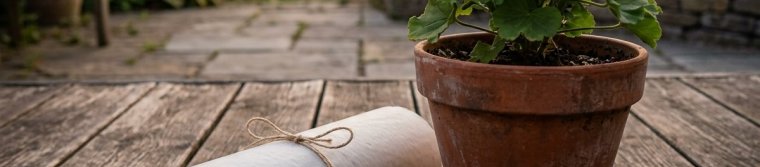
- Roll up a section of newspaper, or use corrugated cardboard, bamboo tubes or a short piece of hose.
- Place these traps on the soil or next to the pots just before dark.
- In the morning, shake the earwigs into a container of soapy water.
- Set the traps out again the same evening.
A second option is an oil trap.
The UC program suggests a low-sided can, such as a tuna can, with about half an inch of vegetable oil.
A drop of bacon grease or fish oil makes it more attractive.
The trap works best sunk into the ground so the rim sits at soil level.
For pots on a hard patio, the rolled newspaper is usually the simpler choice.
The UC program says daily trapping will bring earwigs down to tolerable levels.
Keep going every day until you stop catching them.
What About Baits and Sprays?
The UC program says insecticides should rarely be needed when you trap and clean up.
It notes that baits are often not very effective where other food is available.
Where a product is wanted outdoors, it names spinosad baits as the most effective and environmentally sound choice.
It advises applying them at night, before damage becomes severe, and following every label direction.
Indoor insecticide use is not recommended, because it will do little to stop earwigs from entering.
If you have pets, check any product label for warnings.
The ASPCA list of toxic and non-toxic plants also helps you check the plants themselves.
Earwigs That Come Indoors
The UC program explains that earwigs may come inside when it is too dry, too hot or too cold outdoors.
They eventually die indoors, because there is little for them to eat.
You can help them along calmly.
- Sweep or vacuum them up and dispose of them promptly.
- Seal cracks and other entry points around doors and windows.
- Limit mulch, leaves and debris right next to the house.
- Clear leaves from gutters.
- Keep water away from the foundation by fixing downspouts and drainage.
- Switch white outdoor lights to yellow ones, which attract fewer earwigs.
Before Bringing Pots Inside
If a houseplant spent the summer outdoors, check it before it comes back in.
- Lift the pot and look underneath and around the drainage hole.
- Look inside flowers and tight leaf clusters.
- Shake the plant gently over a sheet of paper.
- Leave a rolled newspaper next to the pot overnight as a final check.
Our checklist for inspecting a new houseplant works well for returning plants too.
Pots that spent the season on damp ground may also carry pillbugs and sowbugs.
A Calm Checklist
- Pincers at the tail and a reddish-brown body point to an earwig.
- Earwigs are harmless to people and help control aphids.
- Protect seedlings, soft flowers and soft fruit first.
- Confirm the damage with a flashlight after dark.
- Remove hiding places and lift pots off damp ground.
- Trap every night with rolled newspaper and empty the traps each morning.
- Indoors, sweep them up and seal entry points instead of spraying.
Earwigs are a nuisance that responds well to patience.
A few nights of simple trapping and a tidier patio usually settle the problem.
Your plants recover, and the garden keeps a helpful aphid hunter nearby.
Sources and Further Reading
- UC Statewide Integrated Pest Management Program — Pest Notes: Earwigs: supports the identification, the night feeding and hiding places, the damage, the trapping methods, the advice on baits and sprays, and the steps for earwigs indoors.
- UC Statewide Integrated Pest Management Program — Pillbugs and Sowbugs: supports the advice on keeping mulch and debris back from foundations and sealing gaps against moisture-loving visitors.
- ASPCA Animal Poison Control — Toxic and Non-Toxic Plants: the reference for checking whether a plant is safe around cats and dogs.